Free UK Delivery on orders over £50 !

Growing Guide
When to Sow Seeds in the UK
Timing depends on frost dates and the type of plant.
Annual flowers & fast-growing herbs
Many annuals can be sown indoors in early spring, once the worst frosts have nearly passed, or sown directly outside once soil has warmed.
Perennial flowers
Perennials often need an earlier indoor start, or can be sown in late summer / autumn for plants that establish over winter and flower the following year.
Wildflower mixes
Wildflower seed works well sown either in spring or autumn. Autumn sowing often produces stronger plants, as seeds go through natural cold stratification over winter.
Climbing flowers
Sweet peas and similar climbers are commonly sown in late autumn or very early spring. Check your seed packet notes for exact timings.
General rule: Do not plant tender young seedlings outside until after the last frost date for your local area.
Indoor Seed Starting
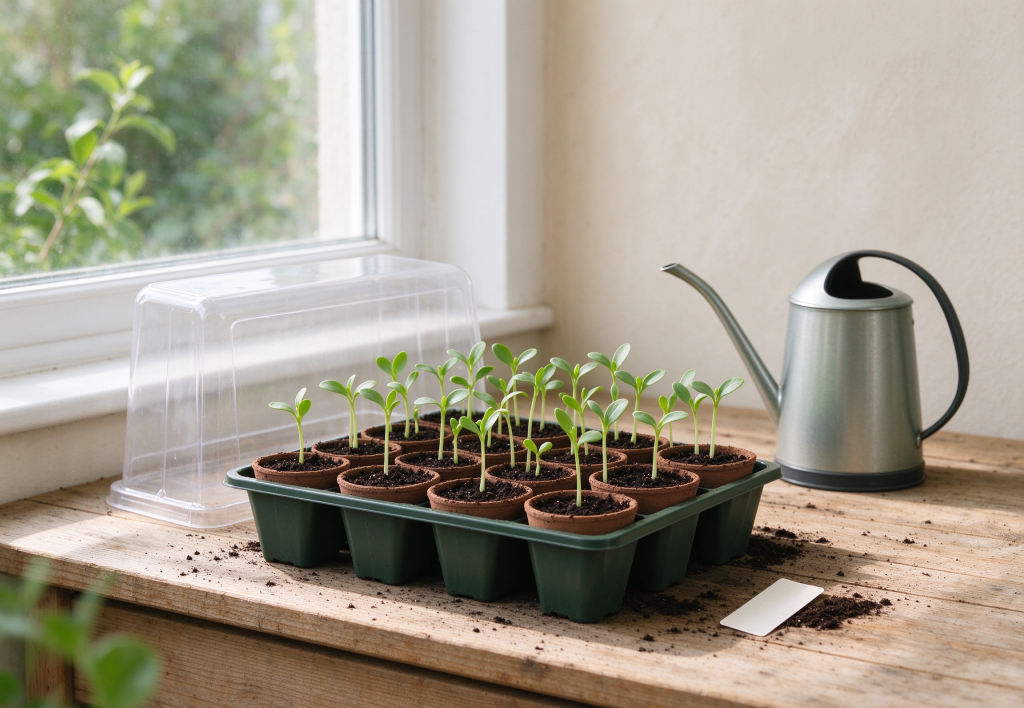
Indoor sowing lets you get a head start before outdoor soil is warm enough.
- Use clean trays or small pots with drainage holes.
- Choose fine, free-draining seed compost. Ordinary garden soil is not suitable for trays, it compacts easily and may carry weed seeds.
- Fill your container and gently firm the compost, do not pack it tight.
- Sow seeds to the depth stated on your packet. A simple rule: most small seeds only need a very light covering of compost, some wildflower seeds need light to germinate and should sit on the surface.
- Water carefully using a fine rose or spray bottle. Heavy watering can wash seeds away.
- Cover trays with a clear lid or plastic film to keep moisture steady. Remove once shoots appear.
- Keep in a bright, cool spot. Hot windowsills can dry compost quickly and scorch young seedlings.
Direct Sowing Outdoors
Direct sowing works well for hardy flowers, wildflower mixes and some herbs.
- Choose a weed-free patch of ground. Rake the soil to create a fine, crumbly tilth.
- Mark out your area. Scatter or space seeds as recommended.
- Cover lightly with soil and press down gently with the back of a rake.
- Water softly and keep the area moist until germination.
- Thin seedlings once they have a few true leaves. Overcrowded plants compete for light and moisture and will not grow well.
Pricking Out & Transplanting Seedlings
Once seedlings have developed their first set of true leaves (not just the initial seed leaves), they can be moved into individual pots.
- Handle seedlings by their leaves only, never pull on the thin stem. Stems bruise easily and the plant will fail.
- Lift with a small dibber or pencil tip, keeping as much soil around the roots as possible.
- Plant into new compost at the same depth it was growing before.
- Water gently after transplanting. Keep out of strong direct sun for the first couple of days while roots settle.
Hardening Off Young Plants
Plants raised indoors need a gradual transition before permanent planting outside. This process is called hardening off.
- Start by placing plants outside in sheltered shade for a few hours each day. Bring them indoors at night.
- Over 7 to 14 days, slowly increase the time outside and expose them to gentle wind and sunlight.
- If frost is forecast, bring plants back inside or cover them.
- Once hardened, they are ready for planting into borders, allotment beds or larger containers.
Watering & Feeding Young Seedlings
Seedlings are delicate and easy to overwater.
- Water only when the top layer of compost feels dry to touch.
- Keep compost evenly moist, not waterlogged. Soggy conditions cause damping off, a fungal disease that kills young seedlings.
- Avoid feeding newly germinated seeds. Compost usually holds enough nutrients for the first few weeks.
- Once plants are established with several leaves, a weak liquid feed can be used occasionally to support growth. Stop feeding as flowering finishes.
Seed Storage
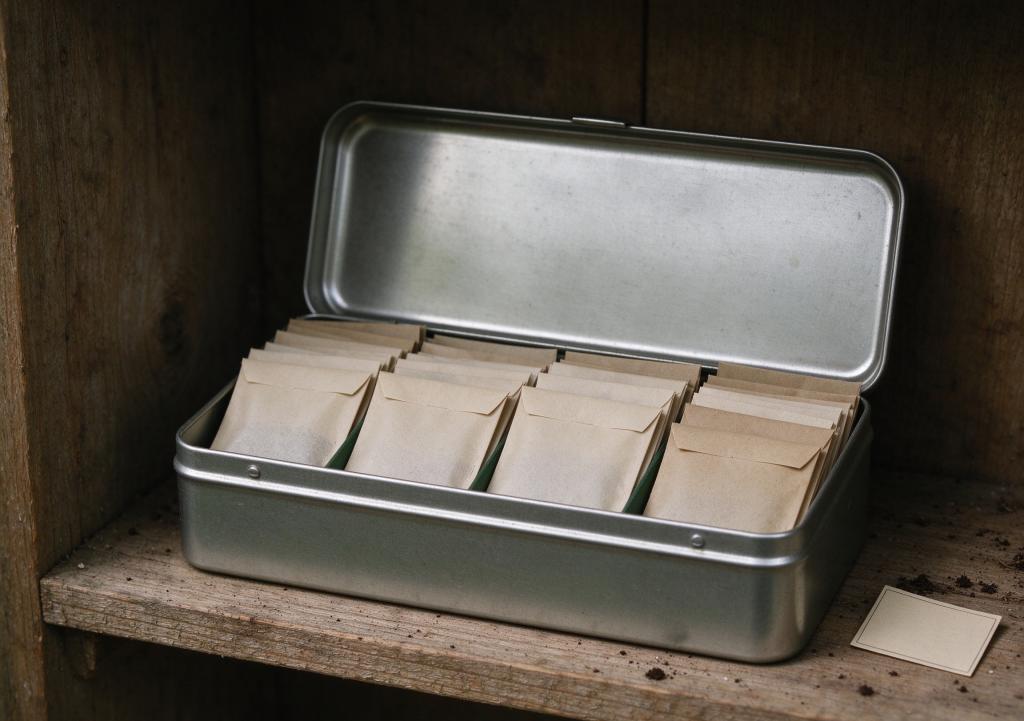
Our seeds arrive in sealed packets. Good storage keeps seed viability for longer.
- Keep seed packets in a cool, dry, dark place.
- Avoid hot sheds, bright windowsills and damp kitchens. Heat and moisture reduce germination rates.
- Do not open packets until you are ready to sow.
- Once opened, reseal and store in an airtight container if possible.
- Check the sow-by date printed on each packet. Germination will slowly drop after this date.
Common Growing Problems
Ready to start sowing?
Browse our range of flower and plant seeds, packed in sealed packets for UK growing.